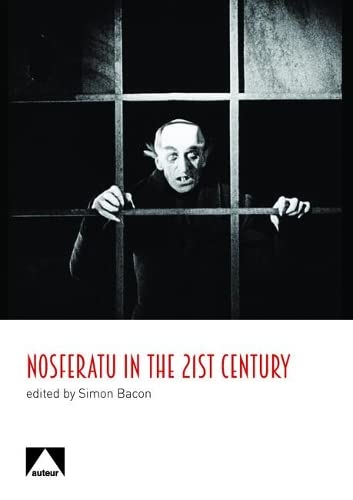
Citing F. W. Murnau’s Nosferatu: A Symphony of Horror (1922) as an example, Richard Rouse III offers that ‘Suspense-driven horror films have long focused on life and death struggles against a world gone mad, with protagonists facing powerful adversaries who are pure evil.’ By comparison, he goes on to say, ‘horror games are a natural fit’ (Rouse III 2009: 16). Yet, in the same way that Stacey Abbot points out that ‘A celluloid vampire is more than simply a film adaptation of the myth; it is the reinvention of the vampire through film technology’ (Abbott 2007: 7), what might this mean for video game vampires? Book length studies of Nosferatu devote chapters to interpretations of Count Orlok’s world, stating that the film ‘is large; it contains multitudes’ (Jackson 2013: 13), and that it is ‘highly ambiguous, full of allusions and echoes’ (Massaccesi 2015: 9). But, while monsters often make the centrepiece of video game narratives, as Dawn Stobbart writes, for many (but not all) of these creatures ‘there is little or no social commentary attached to them’; they are there for ‘play’ (Stobbart 2019: 143). This chapter has two aims. The first is to carry out a survey of representations of Count Orlok and references to the nosferatu (cinematic, literary, and folkloric) in video games. Within this investigation is the second objective: to understand how these vampires have been made to ‘fit’ within video games, formed by the shifting industrial strategies and differing cultural discourses that permit these specific renderings of a digital class of vampire, and to conclude by exploring what still echoes within their shadows.
To initiate the hunt for video games that feature nosferatu, a sound basecamp would be the games that feature nosferatu in their title. Online video game database MobyGames suggests that there are close to 80 published titles sporting Dracula’s name (MobyGames 2020). While this list is incomplete, it is a useful cultural snapshot when compared to the same search enquiry for ‘nosferatu’, which brings back only three hits: Nosferatu the Vampyre (1986) for the Amstrad CPC (converted to additional platforms), Nosferatu (1994) for the Super Nintendo Entertainment System (SNES), and Nosferatu: The Wrath of Malachi (2003) for Microsoft Windows. These games were professionally produced and distributed with mid-tier production values. To this, one may add a further layer of low-budget titles. This would include Windows games Nosferatu Lilinor (2019) and Nosferatu’s Butler (2020), and the mobile game Nosferatu – Run from the Sun (2015) with sequel Nosferatu 2 – Run from the Sun (2015). itch.io, a website for users to share indie video games often made on a minimal-budget, currently features an additional six titles: Orlok’s Ordeal (2014); Never wake up a nosferatu (2016); Nosferatu 13 (2017); Nosferatu’s Lair of Doom! (2018); Nourish Nosferatu (2018); and Nosferatu’s Very Very Bad, No-Good, Terrible Day (2019). Notably, itch.io brings up 60 titles when ‘Dracula’ is searched for, indicating that the deployment of the terms remains heavily skewed irrespective of the scale of production or the point of sale.
One trend that is repeated throughout this chapter is that these games appear to make a token gesture towards the Nosferatu brand without conveying much more than a one-note appraisal of Count Orlok, or they make use of the nosferatu with no adherence to the source material beyond a deployment of the standard tropes of the cumulative vampire mythos (stake/garlic/sun, etc.); although, there is more to these references than a simple passing interest in the subject matter. For example, the online Steam store description for Nosferatu’s Butler indifferently invites the player to work at ‘Count Vlad’s mysterious mansion, better known as Count Dracula: Nosferatu’ (Ani4Bio Animated 2020), but this would also appear to be a strategy designed to maximise their SEO (Search Engine Optimization), as more synonyms for ‘vampire’ would match more search enquiries to potentially increase sales. As often seen in these games, Nosferatu Lilinor uses Nosferatu purely as a synonym for vampire, with the titular figure being an immortal young girl. However, as the game is in the same style of the Castlevania series, the invocation also echoes Florence Stoker’s ghost, with the name being a tactical sidestepping of Akumajō Dracula (Devil’s Castle Dracula), which is how Castlevania is branded in Japan. The Nosferatu Run series are notable in so much that they actually feature a rendering of Count Orlok, although here he is described as ‘the cutest, the fastest and the best vampire of all time’ (Smuttlewerk Interactive 2015), a trend largely followed by the itch.io games where Nosferatu wears hip sunglasses in Never wake up a nosferatu, resembles a child’s toy in Nosferatu’s Lair of Doom!, and is rendered within a retro 8-bit style for Orlok’s Ordeal. With these cute games, the reflexive inversion of the sombre source texts becomes a point of humour and a defanged experience for those that are both culturally competent or new to the material, all without attempting to build on the horror or critical interpretations of their origins.
Within the three games of more substance, any adherence to a cinematic image of the Count is found within two of the titles. Published by Piranha, Nosferatu the Vampyre is the only adaptation – licenced or otherwise – of a Nosferatu film, being an adaption of Werner Herzog’s 1979 remake. Reflecting on why an adaption was being made of a Euro art-house vampiric horror game that was seven years old by this point, Nosferatu the Vampyre developer Graham Stafford has thoughts: ‘I think it was very much dipping its toe in the water, whereas a publisher like Ocean was obviously full-on’ (Milne 2002: 52). Unlike the precarity of the licence itself, and perhaps more crucial for its success, Nosferatu the Vampyre is a 3D isometric game, the vogue genre in which Ocean Software adapted and released their tent-pole Batman and The Great Escape games that same year. The style of Piranha’s game, in which a player protagonist sneaks from one rectilinear room to another, solving environmental puzzles and avoiding/luring the titular character in alternate stages of the narrative, befits the vampire genre as well as the comic book and war genres to which there are resemblances and connections (Stobbart 2019: 27), but going further, the angular, isometric style of the game is also remarkably prescient of the evolution of the horror game genre itself, anticipating the stylings of the Alone in the Dark (1992-2015) and Resident Evil (1996-) series of games.
The form of Nosferatu the Vampyre was driven by the contemporary trend within game design and Nosferatu: The Wrath of Malachi was also made in the most saleable style of the cultural moment for the platform, in this case being a first-person action game. Through the addition of a scratchy filter overlaid over the action, and intertitle cards for advancing the story, Nosferatu: The Wrath of Malachi is a homage to the technology of the source material without being bound to the plot of the movie itself. Despite featuring one of the most game-accurate visual depictions of Orlok, the title is notable for adding several diversionary plot beats to the standard vampire storyline, with the Romanian Count sacrificing the protagonist’s virgin sister so that he may resurrect Lord Malachi, the greater evil within the game. With gypsies, zombies, and assorted demons for the player to fight, the Count has a presence that is eventually diffused and relegated to that of a high-ranked subordinate. Equally, not every Nosferatu game even requires his presence. While Nosferatu (1994) is imitative of the popular trends in game design, being both a side-scrolling amalgamation of Prince of Persia (1989) and the Castlevania titles, the box art, clearly showing a Castlevania inspired variant with his iconic black cape and red lining (itself borrowed from Christopher Lee’s portrayal of the Count across a number of Hammer Film productions), reiterates that the game, set in the 90’s and featuring a double-denim wearing lead, has no relation to Murnau’s film other than the title of the product and the presence of a vampire in a castle setting.
Where Nosferatu is in the title, budgetary constraints affect the length and quality of the product but they do not appear to reflect the level of fidelity to the nosferatu brand (beyond contracted licensing agreements) because the video games each borrow something different and generate something new for the mythology. Crucially, unlike Murnau’s Nosferatu, the digital nosferatu are never alone, in part following the video game structural expectation that minor enemies must be overcome before the final boss fight occurs (Stobbart 2019: 142). The effect that this widening of the enemy types has on the depiction of the nosferatu is arguably the most profound alteration that has occurred in their crossing over into the medium. Where the attempted heroes of Nosferatu fail to be effectual against things beyond their moral and mortal comprehension, in these games, the player protagonist is expected to learn predictive behavioural patterns based on repeated observation (and dying, making the resurrected player more like a vampire than possibly the diegetic vampire itself), and to then engage with a competent, combative move-set of their own. As such, Orlok must become concrete and knowable, and brought into the light.
Searching more broadly for nosferatu across video games, findings can be divided into two categories…
The full 5,500 word version of this article is published in Nosferatu in the 21st Century: A Critical Study, edited by Simon Bacon, published by Liverpool University Press, 2023.

